Discovering the Wonders of the Sonoran Desert: Flora, Fauna, and Landscapes
The Sonoran Desert, sprawling across approximately 260,000 square kilometers (100,000 square miles) in the southwestern United States and northwestern Mexico, stands as one of the most biologically diverse and ecologically unique deserts in the world. Covering parts of Arizona, California, Sonora, Baja California, and Baja California Sur, this desert is renowned not only for its extreme temperatures and arid conditions but also for its remarkable variety of plant and animal life, as well as its striking landscapes.

The Unique Climate of the Sonoran Desert
Unlike many deserts, the Sonoran Desert experiences a subtropical climate characterized by hot summers and mild winters. It is the hottest desert in Mexico and one of the warmest in North America, with summer temperatures near the lower Colorado River often soaring above 120 °F (49 °C). What sets the Sonoran Desert apart is its bimodal rainfall pattern: it receives two distinct rainy seasons, one during the summer monsoon months of July through September and a lighter rainfall in the winter months of December and January. This dual precipitation cycle fosters a more lush and vibrant ecosystem compared to other deserts, with annual rainfall ranging from less than 90 mm (3.5 inches) to around 300 mm (12 inches) depending on the region.
Flora: The Botanical Richness of the Sonoran Desert
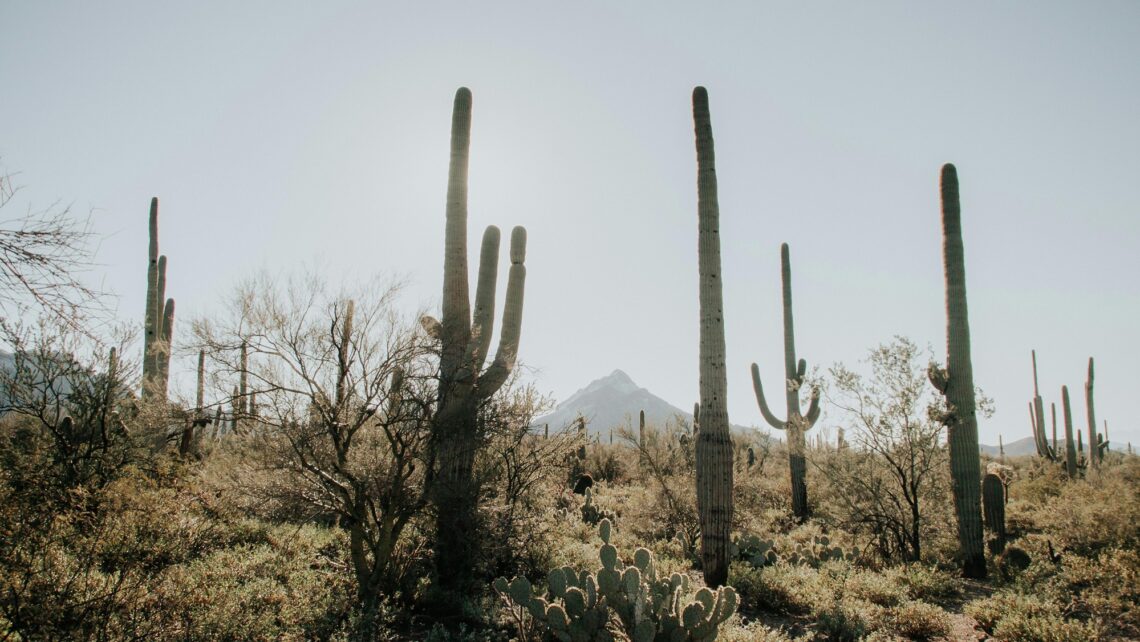
The Sonoran Desert boasts the most diverse plant life of all North American deserts, supporting over 2,000 species of plants. The landscape is dominated by iconic columnar cacti such as the saguaro (Carnegiea gigantea), which can reach towering heights and live for over 150 years. Alongside the saguaro, the organ pipe cactus (Stenocereus thurberi) and the cardon cactus, endemic to Baja California, add to the desert’s distinctive silhouette.
Other notable vegetation includes the barrel cactus, prickly pear, cholla, ocotillo, yucca, century plant, ironwood, palo verde, elephant tree, mesquite, and creosote bush. Thorn forests occur in the southern parts of the desert, while higher elevations support trees adapted to cooler, more temperate climates. The unusual boojum tree (cirio), found in Baja California, is another botanical marvel unique to this desert.
The presence of legume trees and the rich variety of succulents contribute significantly to the desert’s lushness relative to other arid regions. This botanical diversity creates a complex mosaic of habitats that support a wide range of animal species.
Fauna: Adaptations and Diversity in Desert Life
The Sonoran Desert is home to an impressive array of wildlife, adapted to survive in one of the most challenging environments on Earth. It hosts at least 60 species of mammals, more than 350 bird species, 20 amphibian species, about 100 reptile species, and roughly 30 native fish species. Mammals such as desert bighorn sheep, mule deer, collared peccaries (javelinas), mountain lions, gray foxes, and coyotes roam the desert expanses.
Reptiles thrive here, including the venomous Gila monster, western diamondback rattlesnake, and numerous lizards like the desert iguana and horned lizard. The desert is also home to unique bird species such as the roadrunner, Gila woodpecker, Gambel’s quail, burrowing owl, and the tiny elf owl. Notably, the Sonoran Desert near the Mexican border provides vital habitat for the only population of jaguars living in the United States.
Insects such as the Sonoran Desert fly (Drosophila mettleri) have evolved specialized adaptations, including a detoxification system that allows them to thrive in the high temperatures and nest in moist soil regions, showcasing the remarkable evolutionary responses to desert conditions.
Landscapes: The Diverse Terrain of the Sonoran Desert
The Sonoran Desert’s landscapes are as varied as its flora and fauna. It features a series of distinct mountain ranges separated by broad valleys and dotted with forests of saguaros, creating a dramatic and picturesque terrain6. Volcanic fields, cinder cones, and lava flows, such as those found in the El Pinacate y Gran Desierto de Altar biosphere reserve, add geological diversity to the region.
The desert’s topography includes areas of thorn forest, desert plains, and riparian zones along rivers like the Colorado River, which historically supported rich ecological hotspots such as the Colorado River Delta. Though diminished by upstream damming, these riparian areas remain crucial for wildlife.
Protected areas such as Organ Pipe Cactus National Monument, Saguaro National Park, Cabeza Prieta National Wildlife Refuge, and Sonoran Desert National Monument preserve large tracts of this unique desert environment. These parks safeguard not only the landscapes but also archaeological sites, including those of the ancient Hohokam culture, providing insight into human history in the region.
Human Interaction and Conservation
The Sonoran Desert has been inhabited for thousands of years by indigenous peoples such as the Tohono O’odham, Yaqui, Pima, and Yuman tribes, who have adapted their lifestyles to the desert’s rhythms. Spanish explorers and missionaries arrived in the 16th and 17th centuries, followed by ranching and mining activities in the 19th century. Today, the desert is a growing region with major cities like Phoenix and Tucson located within its boundaries, as well as popular resort destinations such as Palm Springs.
Conservation efforts are critical in maintaining the desert’s ecological integrity. Approximately 39% of the Sonoran Desert is protected, and habitat loss is estimated at around 10.5%. These efforts aim to preserve the desert’s rich biodiversity and unique landscapes amid increasing urbanization and climate challenges.
The Sonoran Desert is a remarkable natural treasure, offering a rich tapestry of life and landscapes shaped by its subtropical climate and unique geography. From the towering saguaros and diverse plant communities to the array of resilient wildlife and striking geological features, the desert exemplifies nature’s adaptability and beauty. Its preservation is essential not only for the species that call it home but also for the cultural heritage and natural wonder it represents.
The written content on this page was generated by perplexity.ai.