Taliesin West: Wright’s Desert Masterpiece
Imagine standing at the edge of the Sonoran Desert, the sun dipping behind jagged mountains, the air shimmering with heat. Before you, a low-slung, angular structure seems to rise naturally from the rocky earth. This is Taliesin West—Frank Lloyd Wright’s bold experiment in living and building with the land. More than just an architectural marvel, Taliesin West is a story of vision, community, and creativity—a place where the boundaries between nature and design seem to blur, and where every stone and beam tells a story.
The Dream Begins
By the late 1930s, Frank Lloyd Wright was already a legend. He had designed iconic buildings like the Fallingwater house in Pennsylvania and the original Taliesin in Wisconsin. But as winter’s chill settled over the Midwest each year, Wright craved warmth and new inspiration. Arizona’s wild, sun-baked landscapes called to him.
He found his perfect spot in the foothills outside Scottsdale—a stretch of desert that was, at the time, little more than open wilderness. Wright saw not just a place to escape the cold, but a blank canvas. He called it “the top of the world.” Here, he would create a new kind of home and school, one that would challenge the very idea of what a building could be.
Building with the Desert
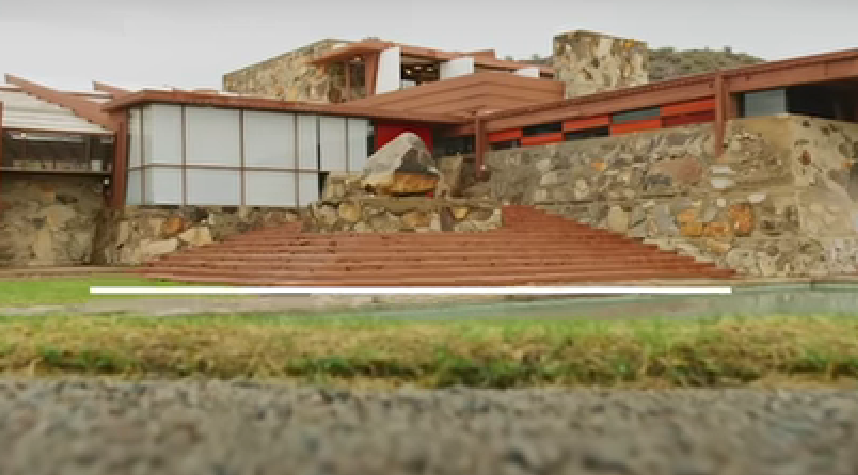
Wright wasn’t interested in building a typical house. He wanted Taliesin West to feel like it belonged to the desert, as if it had always been there. He and his apprentices—students who lived and learned alongside him—used rocks gathered from the site, stacking them in wooden forms and binding them with sand and cement. This “desert masonry” gave the walls a rugged, earthy beauty that echoed the landscape.
The buildings themselves were light and airy. Instead of heavy roofs, Wright used canvas panels stretched over redwood beams. During the day, sunlight filtered through, casting a soft, golden glow inside. At night, the panels could be rolled back, letting in cool breezes and the sound of desert wildlife. It was part house, part tent—a way of living that put people in direct contact with the rhythms of nature.
Life at Taliesin West
Taliesin West was never just a private retreat. From the beginning, it was alive with activity. Wright’s apprentices came from all over the country, drawn by the chance to learn from the master himself. They paid tuition, but they also worked—hauling rocks, mixing cement, cooking meals, and helping with every aspect of daily life.
Living at Taliesin West was an adventure. Many apprentices slept in tents or simple shelters, waking up to the sunrise and the calls of desert birds. They spent their days sketching, building, and debating ideas. Evenings often meant lively dinners, music, and impromptu performances in the site’s theaters. For many, it was a transformative experience—a chance to be part of a creative family, united by a shared passion for architecture and the natural world.
Spaces Full of Character
As you wander through Taliesin West, it’s easy to see how much care went into every detail. The drafting studio, where Wright and his students designed everything from houses to furniture, is flooded with natural light. The dining room, with its long communal table, feels warm and welcoming. The theaters—yes, there are three—hosted everything from plays to lectures, filling the desert nights with laughter and learning.
Wright’s touch is everywhere. He designed much of the furniture himself, often building it on-site. He loved bold colors—deep reds, earthy browns, and vibrant blues that echoed the desert sky. And he was always experimenting, tweaking and changing things as new ideas struck him. The result is a place that feels both carefully crafted and wonderfully alive.
Evolution and Change
Of course, living in the desert isn’t always easy. Over the years, some of Wright’s original ideas had to be adapted. The canvas roofs, while beautiful, didn’t offer much protection from Arizona’s summer heat, so they were eventually replaced with more durable materials. Air conditioning was added to make the buildings comfortable year-round. But through all these changes, the heart of Taliesin West—the sense of openness, creativity, and connection to nature—remained.
Even after Wright’s death in 1959, the community he created lived on. The Taliesin Fellowship continued to teach and build, keeping Wright’s spirit of innovation alive. Today, the site is carefully preserved, a living reminder of what’s possible when people dare to dream differently.
A Lasting Legacy
Taliesin West isn’t just a historic site—it’s a living, breathing place. Its influence can be seen in the work of countless architects who studied there, and in the growing movement toward sustainable, environmentally sensitive design. In 1982, it was named a National Historic Landmark. In 2019, it became a UNESCO World Heritage Site, recognized as one of the great works of modern architecture.
But perhaps its greatest legacy is the way it makes people feel. Visitors often describe a sense of wonder and inspiration, a feeling that they’re standing in a place where creativity and nature come together in perfect harmony. It’s a reminder that architecture isn’t just about buildings—it’s about how we live, how we connect with each other, and how we find our place in the world.
Visiting Taliesin West
Today, Taliesin West welcomes visitors from around the globe. Guided tours offer a chance to step inside Wright’s world, to see the spaces where he worked, taught, and dreamed. The Frank Lloyd Wright Foundation, which cares for the site, continues to offer educational programs and events, keeping the spirit of the Fellowship alive.
Walking the paths of Taliesin West, it’s easy to imagine what it must have been like in Wright’s day—the laughter of apprentices, the sound of hammers and saws, the quiet moments of inspiration as the sun set over the desert. It’s a place that invites you to slow down, to look closely, and to imagine new possibilities.
Taliesin West is more than an architectural masterpiece—it’s a story of vision, community, and the power of place. Frank Lloyd Wright’s desert home challenges us to think differently about how we build and how we live. It reminds us that the best architecture doesn’t just shelter us—it connects us, inspires us, and helps us find beauty in the world around us.
If you ever find yourself in Arizona, don’t miss the chance to visit Taliesin West. Stand in the shadow of its stone walls, feel the desert breeze, and let yourself be inspired by one of the most remarkable places in American history.
The written content on this page was generated by perplexity.ai.